Augmented Reality Roulette: Tracking Initial Integrations in Interactive Play Spaces
Written by Hugo Hartmann · Aug 21, 2026
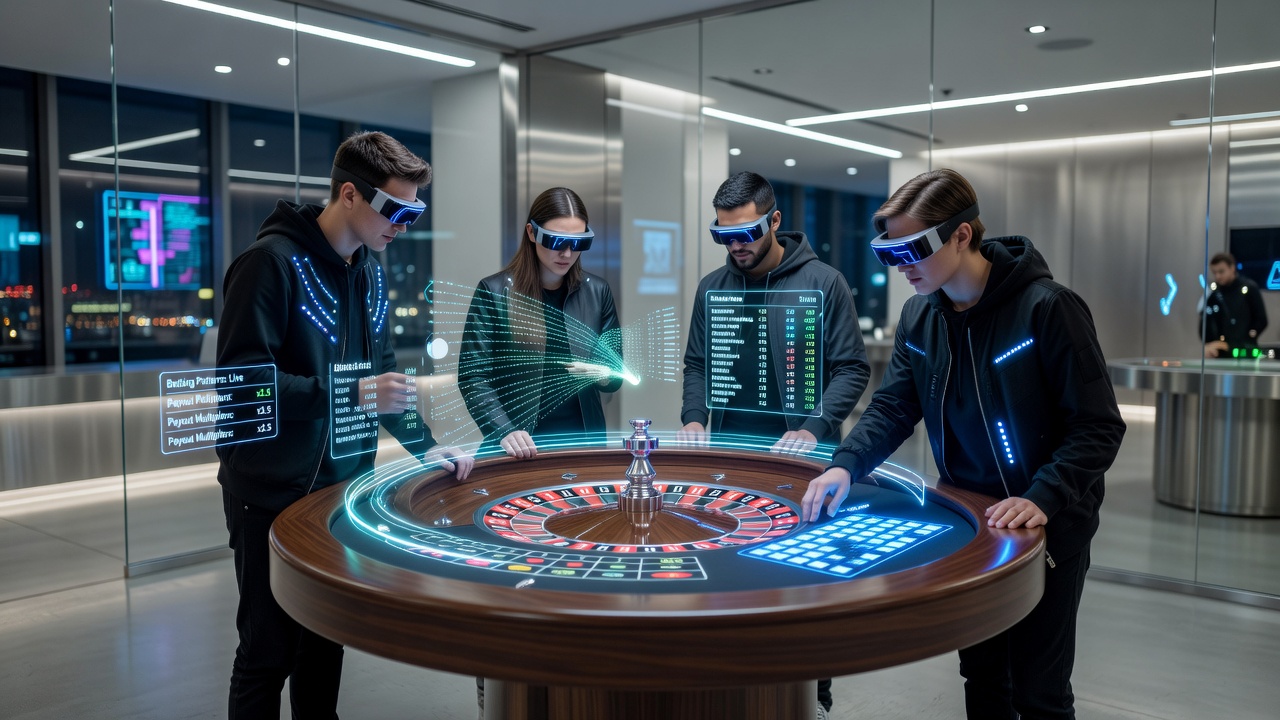
Augmented Reality Roulette: Tracking Initial Integrations in Interactive Play Spaces
Developers began testing augmented reality features with roulette tables in controlled environments as early as 2023, and by August 2026 several platforms had moved those experiments into regulated markets across North America and parts of Asia. Data from industry tracking services show that early adopters focused on overlay graphics that let players see virtual chips, statistics, and multiplayer avatars directly on physical or digital wheels without leaving their mobile devices. Those implementations rely on device cameras and low-latency streaming rather than full virtual environments, which keeps hardware requirements modest for most users.
Technical Foundations Behind the First Deployments
Companies integrated AR toolkits from established providers such as Unity and Unreal Engine with existing live-dealer feeds, creating hybrid interfaces where users point phones at a table image and receive real-time data layers. Synchronization between the physical wheel spin and the augmented display remains the core engineering challenge, because even small delays break the sense of presence. Testing logs from European and Asian operators indicate that sub-50-millisecond latency thresholds became the benchmark for acceptable play in 2025 trials.
Hardware improvements in smartphone processors and 5G network coverage helped close that gap in several regions, allowing smoother tracking of wheel segments and ball trajectories. Observers note that platforms in New Jersey and Ontario completed initial beta phases during the first half of 2026, with user retention metrics rising when AR elements included customizable avatars and shared virtual tables.
Regulatory Pathways and Market Entry Points
State and provincial regulators required separate certification for the AR software layer because it alters how players interact with game outcomes, even though the underlying random number generator or live wheel stays unchanged. In Canada, the Alcohol and Gaming Commission of Ontario published updated technical standards in late 2025 that explicitly address camera-based overlays and data privacy for location tracking. Similar guidance emerged from the Nevada Gaming Control Board, which mandated that AR interfaces display clear disclaimers about the difference between augmented visuals and actual game mechanics.
Those rules helped operators move from closed beta groups to limited public releases by summer 2026. Figures from the Canadian Gaming Association reveal that three licensed sites launched AR roulette modules in Ontario during July and August of that year, each reporting participation rates between 12 and 18 percent of total roulette traffic within the first month.
Player Interaction Patterns and Early Metrics

Session data collected by platform operators show that AR users tend to place more side bets and participate in longer average sessions compared with standard mobile roulette traffic. Researchers tracking engagement across multiple sites found that the addition of visual statistics panels, such as hot-number heat maps or ball-speed indicators, correlated with higher repeat logins. Yet the same datasets indicate that players quickly disable overlays when network conditions cause stuttering, which underscores the importance of fallback modes that revert to conventional 2D interfaces.
One study released by the University of Macau’s Institute of Gaming and Tourism examined cross-border play patterns and noted that AR features increased session frequency among users aged 25 to 34, while older cohorts showed slower uptake. The report, available through the institute’s public repository, also highlighted that social features like shared virtual tables produced the strongest retention lift when paired wth existing live-chat functions.
Hardware and Infrastructure Constraints
Early rollouts remain limited to devices with recent chipsets because older phones struggle to maintain stable camera tracking alongside high-definition video streams. Industry observers point out that operators therefore segment their AR offerings, offering full features only to qualifying hardware while routing other users to lighter versions. This approach mirrors strategies already used for high-definition live streams and reduces support tickets related to performance issues.
Network providers in metropolitan areas of South Korea and Singapore reported that dedicated gaming traffic lanes helped stabilize AR roulette connections during peak evening hours. Those infrastructure adjustments coincided with the August 2026 launch windows for several Asian-facing platforms, allowing smoother scaling than earlier European trials experienced.
Future Development Tracks
Developers continue to refine hand-tracking accuracy so that players can place virtual bets by gesture rather than tapping on-screen buttons, though regulatory bodies still require physical confirmation steps for wager finalization. Partnerships between software studios and established casino groups have accelerated prototype testing, with several announcements scheduled for industry conferences in the final quarter of 2026.
Academic teams at institutions in Australia and the United States are examining how AR interfaces affect decision speed and risk perception, using anonymized session logs supplied under data-sharing agreements with operators. Preliminary findings suggest that visual cues can shorten the time between spins, yet further controlled studies are needed before broader conclusions emerge.
Conclusion
By August 2026 the integration of augmented reality into roulette environments had progressed from laboratory demonstrations to regulated commercial releases in a handful of jurisdictions. Technical standards, hardware capabilities, and player metrics all advanced in parallel, creating the conditions for wider adoption. Continued monitoring by regulators and researchers will determine how these early implementations scale and whether additional safeguards become necessary as interactive layers grow more sophisticated.