Charting Synchronization Challenges Between Multiplayer Wheel Interfaces and Cross-Border Regulatory Updates in Emerging Digital Markets
Written by Bianca Roth · Jun 7, 2026
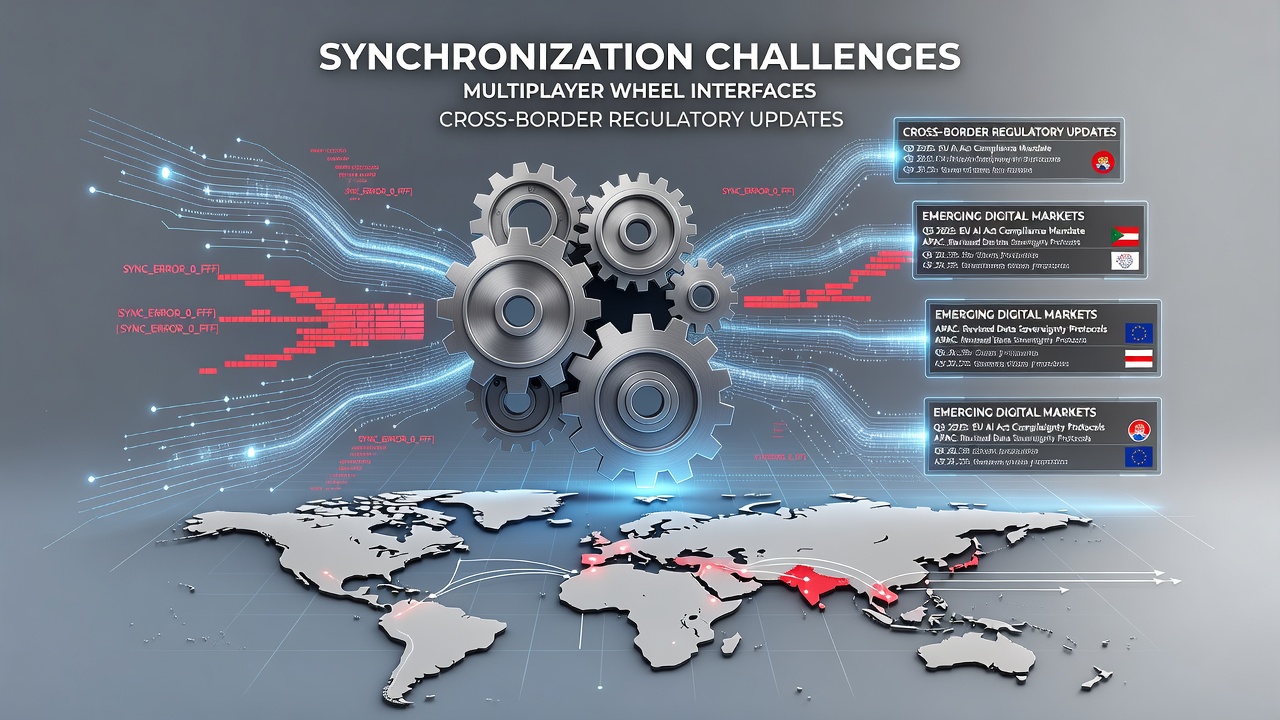
Charting Synchronization Challenges Between Multiplayer Wheel Interfaces and Cross-Border Regulatory Updates in Emerging Digital Markets
Multiplayer wheel interfaces in digital gaming environments operate through shared virtual mechanisms that allow simultaneous participation from users across multiple regions, and these systems must align their data flows with regulatory changes that differ sharply between jurisdictions. Emerging digital markets in Southeast Asia, Latin America, and parts of Africa continue to introduce new compliance requirements around player verification, transaction monitoring, and outcome fairness, creating pressure on the underlying synchronization protocols that keep wheel states consistent for all connected participants.
Core Mechanics of Multiplayer Wheel Synchronization
Developers build these interfaces around centralized servers that broadcast spin results and player actions in real time, yet latency variations and local data handling rules often disrupt the uniform experience required for regulatory adherence. Research from industry groups shows that packet loss or regional server handoffs can desync wheel positions by fractions of a second, enough to trigger audit flags in markets where outcome predictability must remain verifiable at every timestamp.
Cross-border updates compound the issue because regulators in one country may mandate stricter logging of every wheel state change while another jurisdiction imposes data localization rules that prevent full replication across borders. Observers note that when a platform updates its interface to meet a new fairness standard in Brazil, for instance, the same code branch may violate encryption requirements still in force in neighboring markets, forcing fragmented deployments that break unified multiplayer sessions.
Regulatory Shifts and Their Technical Impact
According to reports from the European Gaming and Betting Association, several emerging economies accelerated digital market legislation throughout 2025, with further refinements scheduled for June 2026 that focus on real-time audit trails for randomized outcomes. These updates frequently require operators to expose wheel generation seeds or intermediate hashes to local oversight bodies, yet multiplayer environments must deliver identical seeds to every participant without exposing them to interception during cross-border transmission.
Data indicates that synchronization failures spike when platforms attempt to reconcile these seed-sharing rules with varying retention periods; one market may demand 90-day storage while another requires immediate deletion after session end. Engineers therefore insert conditional filters that pause wheel broadcasts until all regional checks clear, which introduces additional latency and potential state drift among active players.
Case Examples from Emerging Markets
Take one operator expanding into multiple Southeast Asian jurisdictions where live wheel sessions connect participants from Thailand, Indonesia, and Vietnam. Each country rolled out updated player fund segregation rules in early 2026, yet the interface had to pause wheel rotations whenever a single jurisdiction's verification API returned delayed responses. The result was staggered spin starts that violated the simultaneous participation model central to the game's design.

Similar patterns appear in Latin American rollouts. A study published by the University of Nevada's gaming research division highlighted how Mexican data residency mandates forced operators to route certain wheel metadata through domestic nodes, while Chilean rules allowed direct cloud routing. The mismatch created duplicate state records that required manual reconciliation, delaying regulatory sign-off for new multiplayer features.
Technical Approaches Under Development
Teams address these frictions by deploying modular compliance layers that sit between the core wheel engine and regional gateways. These layers apply jurisdiction-specific transformations to outgoing data packets while preserving the internal game state for all participants. Yet the added processing steps increase computational overhead and can themselves become points of failure when regulatory text changes faster than the layer's update cycle.
Industry organizations tracking these deployments report that automated conflict detection tools now scan proposed regulatory amendments against existing synchronization code, flagging potential desync risks before implementation. Still, human review remains necessary for ambiguous clauses, and that review window often overlaps with the June 2026 deadlines many markets have set for full compliance.
Outlook for Platform Operators
Platforms that maintain separate wheel instances per major regulatory bloc reduce cross-border exposure but lose the scale advantages of unified multiplayer pools. Conversely, those pursuing single-instance global deployments invest heavily in dynamic routing and encryption schemes that satisfy the strictest current rules while remaining adaptable to future amendments. Evidence from pilot programs suggests the latter strategy yields higher player retention when synchronization holds, yet it demands continuous monitoring infrastructure that smaller operators may struggle to fund.
Conclusion
The intersection of multiplayer wheel interfaces and evolving cross-border regulations continues to generate measurable synchronization overhead in emerging digital markets. Operators track these dynamics through compliance dashboards and modular code architectures, while regulatory bodies issue periodic updates that require corresponding adjustments to data flows and audit mechanisms. As June 2026 approaches, the pace of alignment between technical synchronization and legal requirements will determine which platforms sustain seamless multiplayer experiences across multiple jurisdictions.