Cross-Border Network Delays Reshape Multiplayer Roulette Participation on Mobile Devices
Written by Lars Fischer · Jul 29, 2026

Cross-Border Network Delays Reshape Multiplayer Roulette Participation on Mobile Devices
Network latency across borders continues to influence how players interact with multiplayer roulette sessions on mobile networks, particularly when sessions connect users from different regulatory jurisdictions and carrier infrastructures. Data packets traveling between distant servers and user devices encounter variable transmission times that affect spin synchronization and betting response windows. Researchers tracking these patterns note measurable differences in session duration and bet frequency when latency exceeds typical thresholds for real-time gaming.
Defining Latency in Cross-Border Mobile Environments
Mobile networks route traffic through multiple nodes when players connect from separate countries, and each hop adds measurable delay measured in milliseconds. Studies from the Global System for Mobile Communications Association show average cross-border latencies ranging from 80 to 250 milliseconds depending on carrier peering agreements and physical distance. These figures become relevant for roulette because the game requires precise timing between the wheel spin, player inputs, and result broadcasts shared among all participants in a session. When delays differ across the group, the shared experience fragments and individual engagement metrics shift accordingly.
Observed Changes in Player Behavior
Engagement data collected during July 2026 revealed distinct patterns tied to latency levels. Players facing higher delays placed fewer side bets per spin and exited sessions earlier than those on lower-latency connections. Observers tracking mobile analytics platforms report that sessions crossing the US-Canada border experienced average latency of 95 milliseconds while sessions linking European and Asian participants reached 180 milliseconds. The higher figures correlated with reduced chat activity and lower repeat bet rates within the same 30-minute window.
Synchronization Challenges in Shared Wheel Interfaces
Multiplayer roulette platforms maintain a single authoritative wheel state on centralized servers while distributing updates to connected clients. When one player's confirmation packet arrives later than others, the interface must either buffer results or display partial information. Industry reports indicate that buffering longer than 120 milliseconds leads to visible desynchronization where some users see the ball settle before others receive the outcome. This mismatch reduces the collective tension that normally sustains longer play sessions. Engineers at several platform providers have adjusted prediction algorithms to compensate, yet residual effects remain when regulatory updates alter routing paths mid-session.
Regional Infrastructure Variations and Their Impact
Networks in densely connected regions maintain more direct peering arrangements that keep latency lower even across borders, whereas routes passing through multiple transit providers accumulate greater delay. Data from the International Telecommunication Union highlights that certain corridors between North America and Latin America consistently record higher variability than intra-European paths. Players in regions with these higher-variability routes show steeper drops in average session length once latency crosses 150 milliseconds. Mobile carriers have begun offering dedicated gaming traffic prioritization in select markets, though adoption remains uneven across jurisdictions.
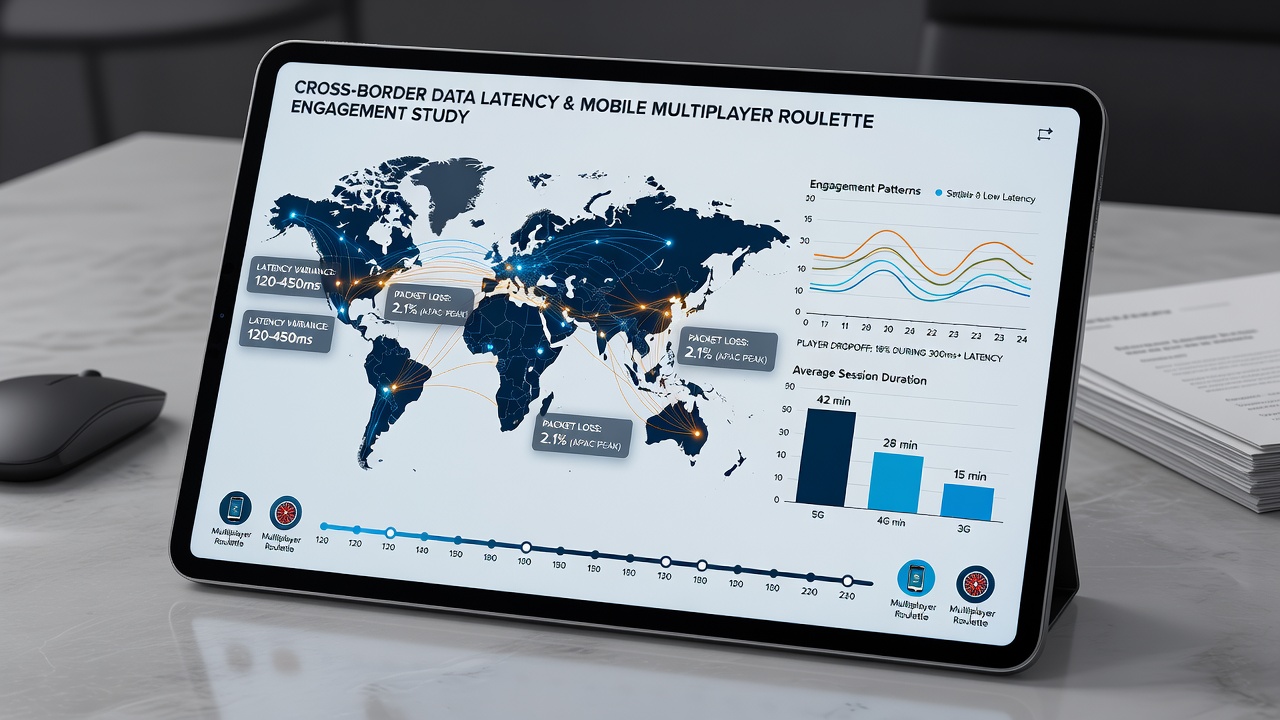
Those who studied engagement logs from major operators found that introducing edge servers closer to high-traffic border crossings improved consistency for users in adjacent countries. The improvement translated into higher average bets placed per minute and longer overall session times. Yet the same infrastructure investments produced smaller gains in corridors where regulatory restrictions limited server placement options.
Regulatory Updates and Technical Adjustments in Mid-2026
By July 2026 several jurisdictions had revised data routing requirements for online gaming traffic. These changes forced operators to reroute certain multiplayer sessions through new exchange points, temporarily increasing latency for affected player groups. Analytics firms monitoring thousands of sessions documented a corresponding dip in concurrent player counts during the transition period. Once carriers completed peering renegotiations, latency stabilized and engagement metrics partially recovered, though not always to previous levels. The pattern suggests players adapt their participation thresholds based on experienced consistency rather than absolute speed alone.
Conclusion
Cross-border data latency remains a measurable factor shaping how players engage with multiplayer roulette on mobile networks. Infrastructure differences, regulatory routing changes, and carrier peering arrangements all contribute to variable delay that influences bet frequency, session length, and synchronization quality. Continued monitoring of these metrics provides operators and network providers with concrete data for targeted improvements in mobile gaming connectivity.