Decoding Synchronization Protocols Linking Mobile Interfaces to Centralized Roulette Servers Across Jurisdictions
Written by Bianca Roth · Jul 15, 2026
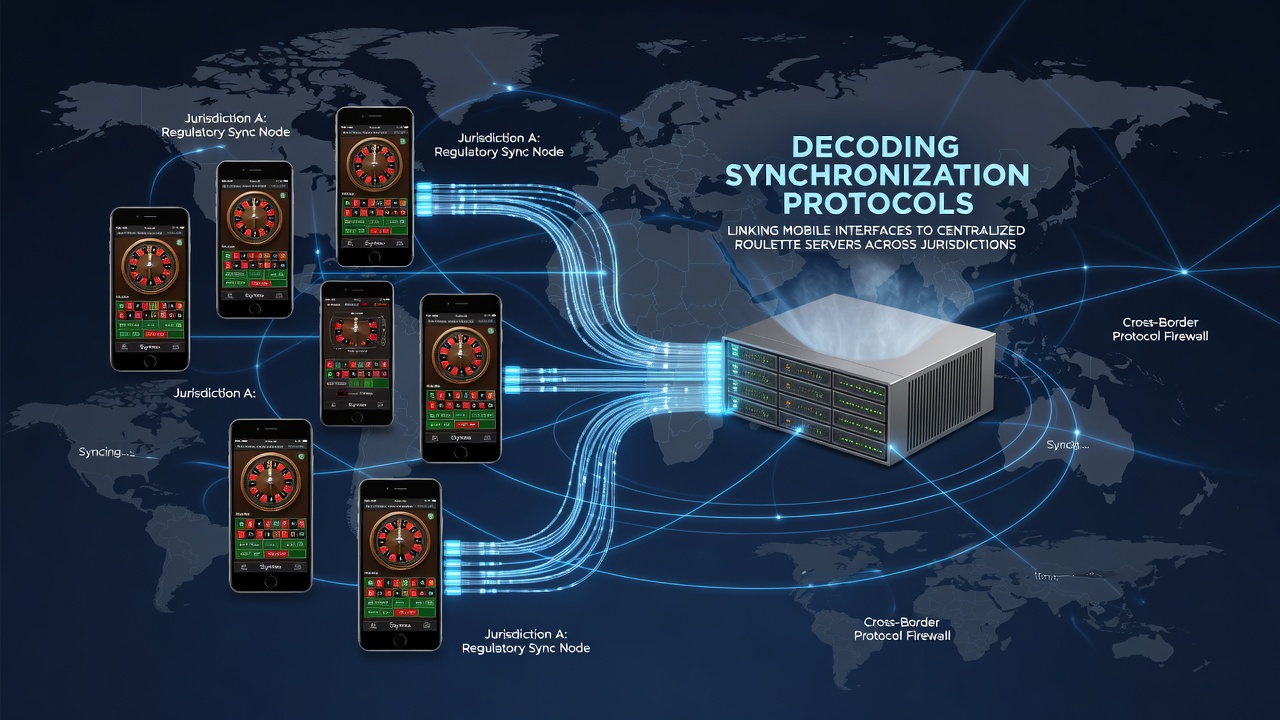
Decoding Synchronization Protocols Linking Mobile Interfaces to Centralized Roulette Servers Across Jurisdictions
Operators in regulated markets rely on synchronization protocols to connect mobile interfaces directly with centralized roulette servers that manage game outcomes, player accounts, and regulatory reporting across multiple jurisdictions. These systems transmit spin results, balance updates, and session data in real time while meeting distinct legal requirements in each territory.
Core Technical Mechanisms
Protocols such as WebSocket connections and TCP-based messaging handle continuous data streams between mobile clients and backend servers, and they maintain session integrity even when players switch networks or cross geographic boundaries. Data packets include encrypted RNG seeds, timestamp markers, and jurisdiction-specific compliance flags that servers validate before processing each roulette spin.
Research from Gaming Laboratories International shows that latency targets under 150 milliseconds remain standard in multi-state deployments, while operators achieve this through edge caching nodes positioned near major population centers. Servers log every transaction with unique identifiers that regulatory bodies can audit independently.
Jurisdictional Compliance Layers
Each licensing authority imposes distinct rules on data handling and reporting frequency. Operators configure protocol stacks to embed location verification tokens and tax calculation modules that activate based on detected player coordinates. In July 2026 several U.S. states updated their data retention mandates, requiring servers to store synchronization logs for 90 days instead of the previous 60-day minimum.
European markets apply additional encryption standards derived from eIDAS regulations, whereas certain Asian jurisdictions focus on real-time reporting to central monitoring hubs. Protocol gateways translate these requirements into unified server instructions without interrupting gameplay flow.
Cross-Border Data Flow Challenges
Network handoffs between carriers and international peering points introduce variable packet loss that synchronization algorithms must detect and correct. Servers use sequence numbering and checksum validation to retransmit only affected roulette outcome packets, preserving game fairness across borders.
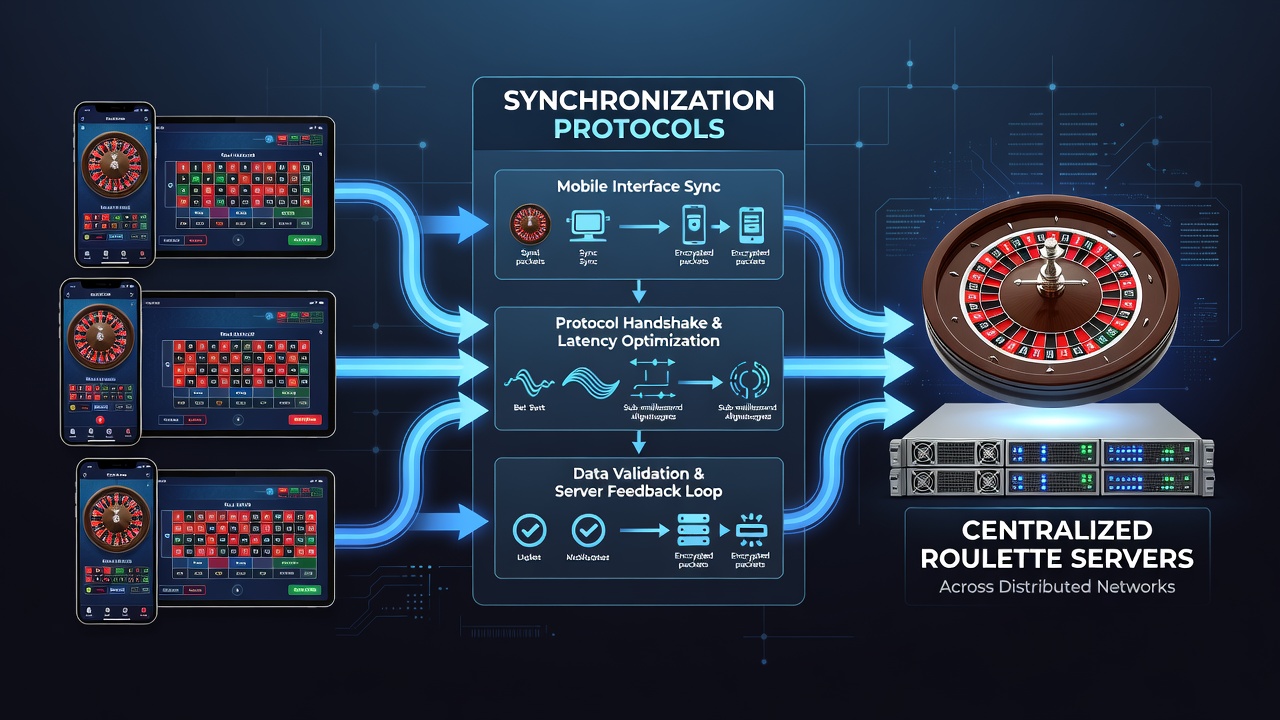
Observers note that mergers between software providers have accelerated adoption of standardized APIs, allowing legacy mobile apps to interface with newer central servers without full rewrites. One documented case involved a platform migration completed in under four weeks after implementing modular protocol adapters.
Security and Audit Integration
Encryption at the transport layer combines with application-level signing of RNG results, and regulators access these signed records through dedicated portals. Data from the Nevada Gaming Control Board indicates that synchronization-related incidents accounted for less than 0.02 percent of total spins processed in the first half of 2026.
Academic analyses published through university gaming research centers highlight how timestamp synchronization across time zones prevents disputes during peak evening hours in different regions. Operators deploy NTP-stratum servers to align clocks within single-digit millisecond tolerances.
Future Protocol Developments
Industry groups including the World Lottery Association continue to explore enhanced protocols that incorporate blockchain-based verification for cross-jurisdiction audit trails. Early pilots demonstrate reduced reconciliation times between operators and regulators when immutable spin records replace traditional log files.
These advancements build on existing WebSocket frameworks while adding redundant pathways that activate automatically during network congestion. Implementation timelines vary by jurisdiction, yet coordinated testing schedules have emerged among neighboring regulatory bodies.
Conclusion
Synchronization protocols form the backbone of mobile roulette operations spanning multiple regulatory environments, and ongoing refinements address both technical performance and compliance demands. Data from multiple sources confirms steady progress in reducing latency while expanding audit capabilities for authorities worldwide.