Mapping Regulatory Influences on Roulette Software Adaptations for Mobile Users in Emerging Markets
Written by Jakob Becker · Jun 12, 2026

Mapping Regulatory Influences on Roulette Software Adaptations for Mobile Users in Emerging Markets
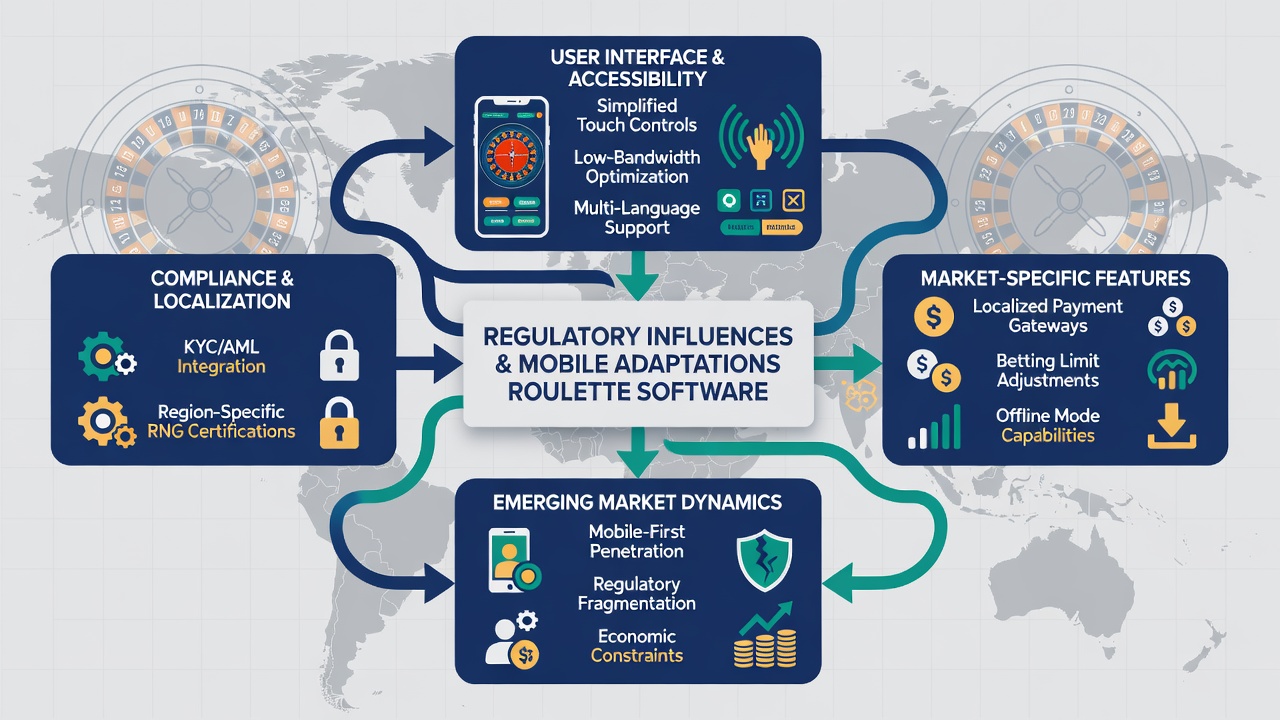
Regulatory frameworks across emerging markets continue to shape how roulette software gets adapted for mobile platforms, with developers adjusting codebases to meet local licensing requirements, data protection standards, and payment integration rules. These adaptations often involve modifications to random number generator certification processes, user interface localization, and real-time compliance monitoring systems that track player activity according to jurisdiction-specific thresholds.
Regulatory Landscapes in Key Emerging Regions
Brazil's recent legislative updates, finalized ahead of June 2026 implementation deadlines, require mobile roulette applications to incorporate geo-fencing technology alongside mandatory integration with national payment gateways that enforce transaction reporting to tax authorities. Similar patterns appear in Indonesia where regulators mandate server localization for all gaming data, forcing software providers to establish in-country infrastructure that supports low-latency mobile gameplay while maintaining audit trails for every spin outcome.
India's state-level variations create additional complexity since mobile roulette operators must navigate differing age verification protocols and advertising restrictions that change across regions, leading developers to build modular compliance engines capable of switching rule sets based on detected user location. Observers note that these fragmented approaches have accelerated the adoption of cloud-based configuration tools that allow rapid updates without full application resubmission.
Software Adaptation Mechanisms
Developers respond to these regulatory demands through several technical pathways including dynamic content filtering that removes or alters features prohibited in specific markets, such as certain bonus structures or autoplay functions. Payment system integrations receive particular attention since many emerging markets require support for local digital wallets and prepaid cards that interface directly with banking oversight bodies.
Research from the Gaming Standards Association indicates that certification timelines for mobile roulette platforms have extended by an average of 45 days in regulated emerging jurisdictions due to additional testing layers for fairness algorithms and security protocols. These extensions reflect requirements for independent laboratory verification of both RNG outputs and encryption standards before commercial deployment.
Technical Challenges in Mobile Implementation
Cross-border data transfer restrictions present ongoing obstacles for multinational operators who must segment user databases according to regulatory boundaries while preserving seamless gameplay experiences for players who travel between jurisdictions. Software engineers address this through encrypted session management that maintains continuity without exposing sensitive information across borders.
Device compatibility requirements also evolve as regulators specify minimum hardware standards for security features like biometric authentication and secure element storage. In several African markets, these specifications have prompted developers to optimize applications for lower-specification smartphones common among target demographics, incorporating progressive loading techniques that reduce data consumption during live roulette sessions.
Industry Responses and Standardization Efforts
Trade organizations have begun developing unified compliance frameworks that map regulatory requirements across multiple emerging markets, allowing software providers to create core platforms with jurisdiction-specific plug-ins. This modular approach reduces redevelopment costs while ensuring that each adaptation meets local standards for responsible gaming features including session time limits and deposit caps.
Data compiled by the International Center for Responsible Gaming shows increased investment in automated monitoring systems that detect and flag potential regulatory violations in real time across mobile roulette deployments. These systems analyze betting patterns, account activity, and geographic signals to trigger appropriate compliance responses without manual intervention.
Future Trajectories for Regulatory Alignment
As emerging markets continue refining their gaming regulations through mid-2026, software adaptation processes are expected to incorporate more sophisticated artificial intelligence tools for predictive compliance checking. These tools scan proposed code changes against regulatory databases to identify potential conflicts before deployment, streamlining approval processes that currently rely heavily on manual review cycles.
Conclusion
The interplay between regulatory requirements and mobile roulette software development continues to drive innovation in compliance architecture across emerging markets. Developers who master these adaptation challenges position themselves to serve expanding user bases while meeting the evolving standards set by regional authorities. Ongoing collaboration between regulators, standards organizations, and technology providers remains essential for creating sustainable frameworks that support both market growth and player protection objectives.