Tracing RNG Certification Timelines from Testing Labs to Mobile Wheel Interfaces in Regulated Markets
Written by Ben Sullivan · May 27, 2026
Tracing RNG Certification Timelines from Testing Labs to Mobile Wheel Interfaces in Regulated Markets
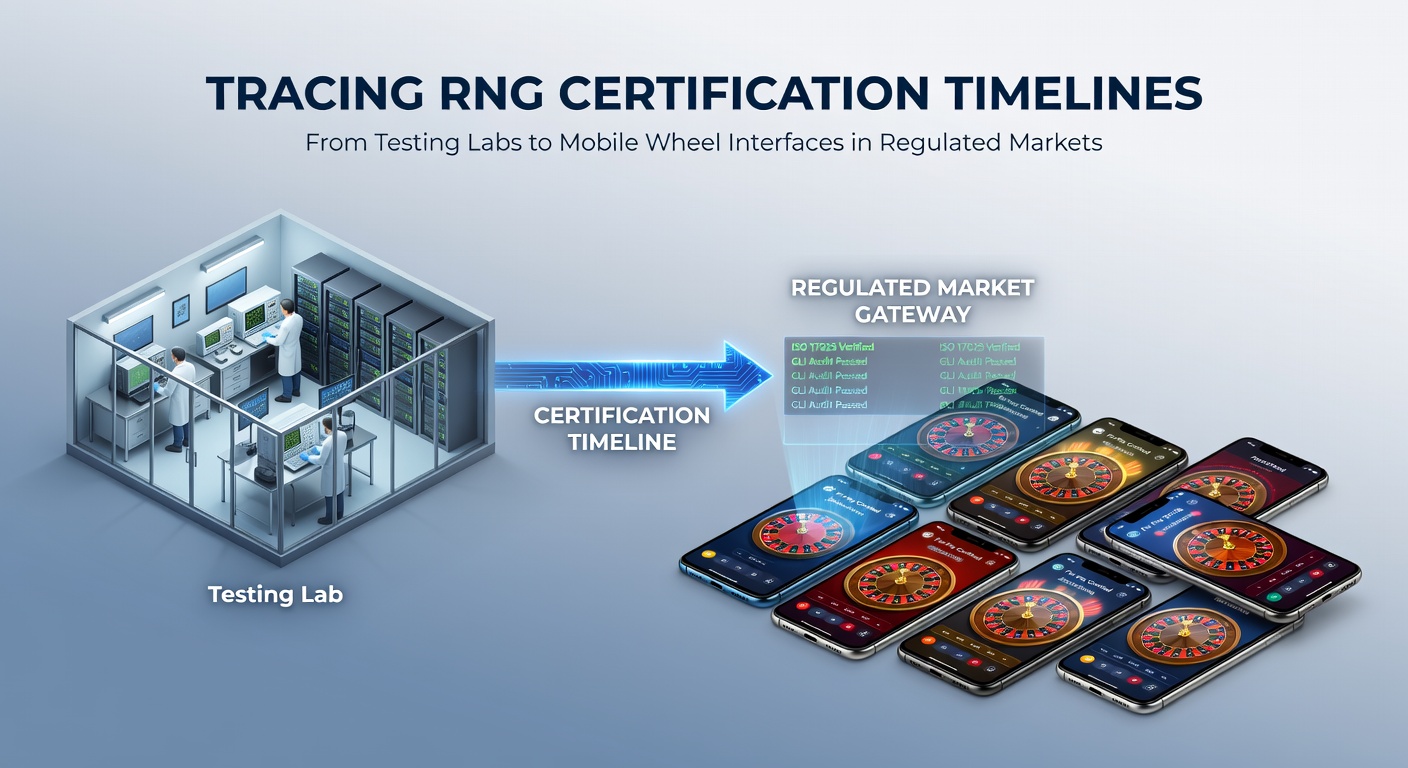
Random number generator certification follows a structured path that begins in specialized laboratories and ends at mobile interfaces displaying roulette wheels in regulated jurisdictions, and observers note that this process involves multiple verification stages designed to maintain integrity across different platforms. Data from industry reports indicates that testing typically starts when developers submit software code to accredited facilities such as those operated by Gaming Laboratories International or iTech Labs, where analysts examine algorithms for statistical randomness using standardized test suites that include diehard and NIST benchmarks.
Initial Laboratory Evaluation Stages
Once submitted, the evaluation phase runs for periods ranging from two weeks to several months depending on code complexity and any required modifications, while technicians run millions of simulated spins to confirm uniform distribution patterns and absence of predictable sequences. Regulators in various regions require retesting whenever updates occur, so the timeline resets with each new version submitted for review, and this creates a recurring cycle that developers must factor into release schedules.
Certification bodies issue formal reports only after all criteria pass, at which point the laboratory provides documentation that includes seed generation methods, output mapping protocols, and entropy source validation results. Those documents then travel with the software package to operators who prepare it for deployment on mobile applications serving regulated markets.
Integration into Mobile Wheel Interfaces
After laboratory approval the certified RNG module moves into the integration phase where developers embed it within the broader game client that renders the wheel graphics and handles player inputs on smartphones and tablets. Engineers map the random outputs to specific wheel segments using fixed conversion tables, ensuring that visual results align precisely with the certified sequences without introducing additional processing layers that could alter probabilities.
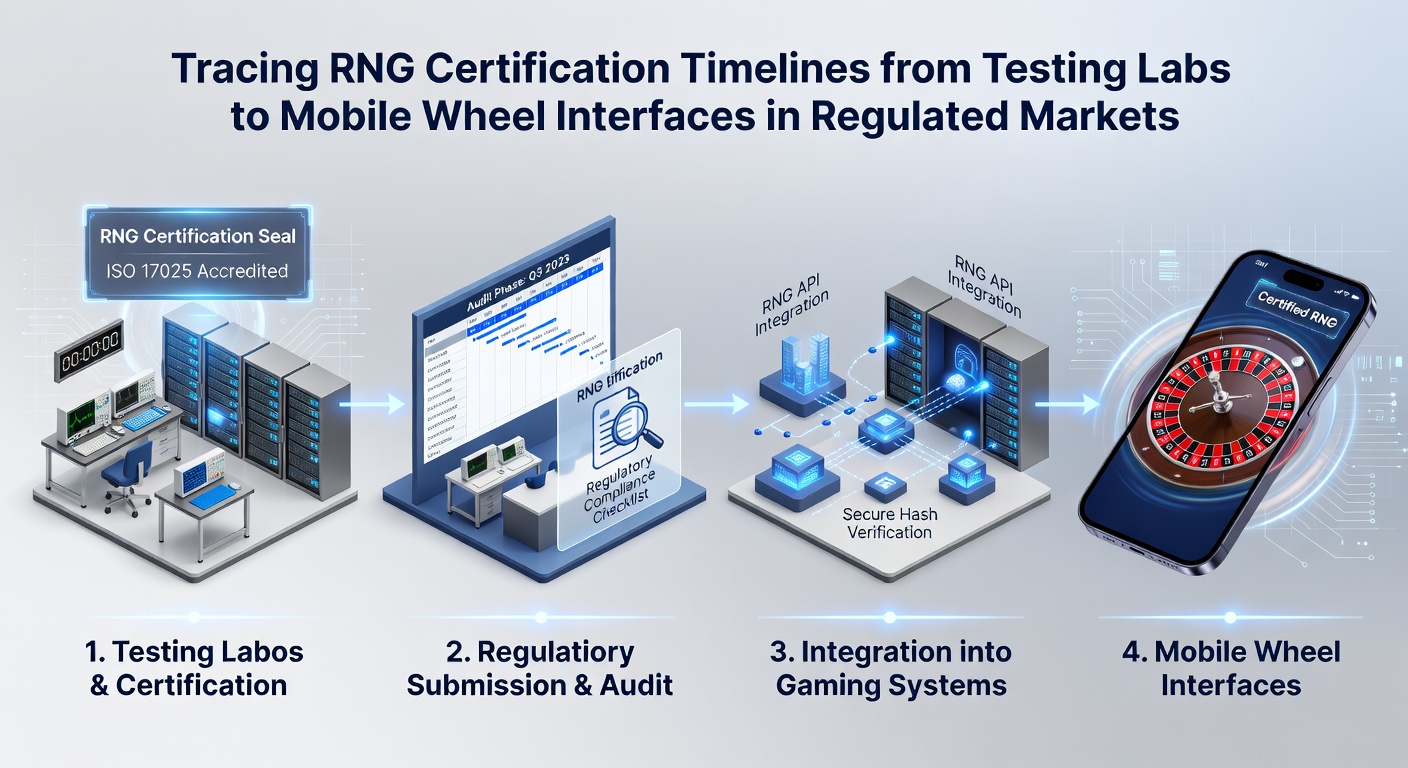
Testing continues at this stage through sandbox environments that simulate network conditions and device variations, because mobile operating systems apply their own security restrictions that can affect how the RNG initializes or retrieves values. Data shows that compatibility verification often extends the overall timeline by an additional four to eight weeks before operators submit final builds to regulatory authorities for market-specific approval.
Regulatory Review and Market Deployment
Regulated markets impose their own oversight layers after laboratory certification completes, and authorities such as the Nevada Gaming Control Board conduct supplemental audits that focus on how the RNG behaves within the live operational environment rather than isolated code analysis. Similar procedures apply in Ontario where the Alcohol and Gaming Commission reviews mobile implementations for compliance with local technical standards before licensing operators to offer real-money play.
Timelines for this final regulatory step vary by jurisdiction, with some completing reviews in thirty days while others require up to ninety days when additional documentation or live demonstrations are requested. In May 2026 several North American markets updated their submission portals to accept digital certification bundles directly from laboratories, shortening the handoff period between testing facilities and regulators by approximately two weeks according to industry tracking data.
Operators must also maintain ongoing monitoring systems that log RNG performance metrics after launch, because any detected deviation triggers mandatory reporting and potential recertification. This post-deployment surveillance adds another continuous timeline element that runs parallel to the initial certification process and ensures sustained compliance across device updates and network changes.
Cross-Border Variations in Certification Practices
Different regions apply distinct technical requirements that influence how long certification takes before mobile interfaces reach players, and European jurisdictions often emphasize cryptographic module validation while certain U.S. states prioritize statistical output testing. Australian state regulators add hardware security module checks for backend servers that feed results to mobile clients, creating an extra verification layer that extends timelines compared to markets focused primarily on software analysis.
Developers who operate across multiple jurisdictions therefore maintain parallel certification tracks, submitting the same RNG core to different laboratories simultaneously to align release windows. This approach reduces overall delays but requires careful coordination to ensure each authority receives jurisdiction-specific adaptations without altering the underlying random generation logic.
Conclusion
The journey from laboratory testing to mobile wheel display in regulated markets follows defined stages that combine statistical validation, software integration, and jurisdictional oversight, with each step contributing measurable time to the total certification timeline. Updates implemented in May 2026 have begun streamlining certain handoff procedures, yet the requirement for repeated verification after any code change continues to shape development cycles across the industry.